
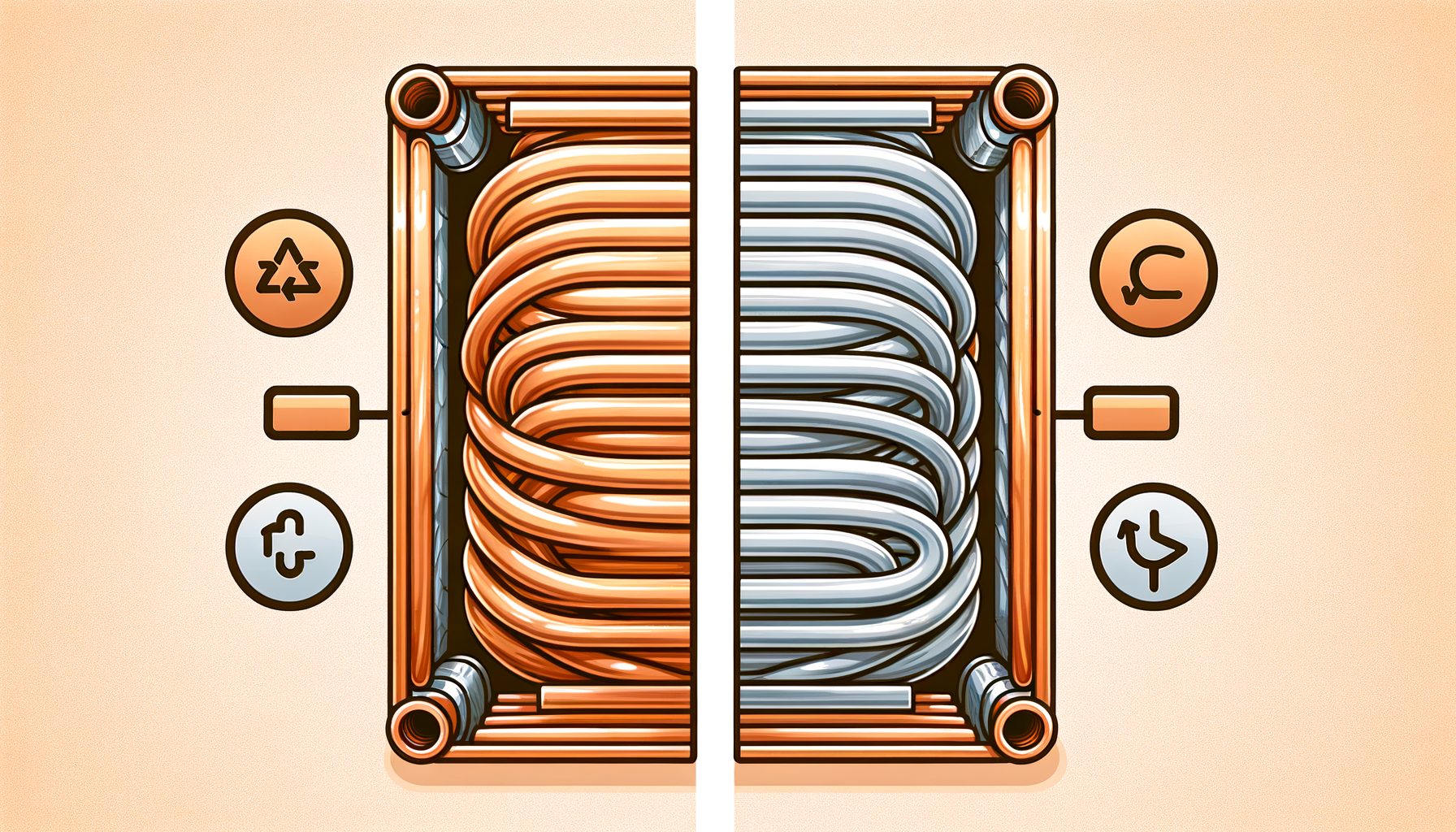
Choosing between Copper vs Aluminum Coils confuses homeowners, building managers, and even HVAC pros. Marketing can be loud. Real-world impact hinges on climate, maintenance, refrigerant, and coil design. Pick wrong and you risk higher bills, more repairs, or weak cooling when you need it most. In this guide, the facts are unpacked in plain language with credible data and field know-how. By the end, you’ll know which coil material fits your climate, budget, and maintenance style—so your HVAC system delivers comfort and value for years.
Thermal Performance and Efficiency: What Really Changes in the Field
When people compare Copper vs Aluminum Coils, they usually start with heat transfer. On paper, copper conducts heat better than aluminum (roughly 385 W/m·K vs about 205 W/m·K). Sounds like an automatic win, right? Not so fast. Coil geometry, fin design, refrigerant type, airflow, and manufacturing methods can erase—or even reverse—material advantages. For example, aluminum microchannel coils use flat multi-port tubes and optimized fins to increase surface area and cut air-side resistance dramatically. Many modern aluminum designs now match or beat system efficiency while using less refrigerant and weighing less.
In real installations, what you feel at the thermostat is the system’s overall efficiency, not the raw conductivity of a single part. Ratings like SEER2, EER, and HSPF2 depend on the exact indoor/outdoor match, fan speed control, expansion devices, and coil sizing. Some manufacturers reach high SEER2 with copper tube-and-fin coils using smaller tube diameters (5–7 mm) and rifled passages. Others pair aluminum microchannel coils with variable-speed compressors to hit top-tier ratings. Well, here it is: material is just one lever among many.
Another field factor is refrigerant charge and pressure drop. Aluminum microchannel coils often need 20–40% less refrigerant than legacy copper tube-fin designs. That can boost efficiency and shrink environmental risk if a leak occurs. On the flip side, copper coils are usually easier to service, modify, or repair because technicians can cut, flare, and braze with common tools. Microchannel aluminum coils can be repaired, but techniques are more specialized and sometimes less practical on older or heavily corroded units.
If you’re comparing two specific systems, check the AHRI certificate for the exact indoor/outdoor matchup. Guesswork disappears, and you’ll see whether coil material actually shifts seasonal energy use. In many cases, the difference is small—often within 1–3%—compared with bigger drivers like correct sizing, duct quality, and maintenance.
Quick reference values (typical ranges):
| Property | Copper Coil | Aluminum Coil (Microchannel/Tube-Fin) |
|---|---|---|
| Thermal Conductivity | ~385 W/m·K | ~205 W/m·K |
| Weight (for same capacity) | Higher | Lower |
| Typical Refrigerant Charge | Baseline | Often 20–40% lower |
| Field Repairability | Generally easier to braze/modify | Repairable but more specialized; sometimes replaced |
| Common Design | Tube-and-fin (round/mini channels) | Microchannel or tube-and-fin |
For deeper reading on efficiency ratings and coil fundamentals, see AHRI’s Directory of Certified Product Performance (https://www.ahridirectory.org) and the ASHRAE Handbook series (https://www.ashrae.org/technical-resources/ashrae-handbook).
Durability, Corrosion, and Maintenance: The Hidden Cost Curve
Durability can make or break total cost of ownership. Both copper and aluminum can last many years when designed and maintained well. The risks differ. Copper is susceptible to formicary corrosion—microscopic pinholes often triggered by organic acids in indoor air from certain cleaners or off-gassing materials. Aluminum resists formicary corrosion but can pit in salty or industrial environments, especially near coastlines where airborne chlorides accelerate damage. When dissimilar metals meet moisture (for example, copper lines tied to aluminum coils without proper isolation), galvanic corrosion can appear.
Coatings are your friend. E-coat, epoxy, or hydrophilic coatings help both copper and aluminum survive harsh air and water. In coastal zones (roughly within 3–5 km/2–3 miles of the ocean), a coated coil often matters more than the base metal. Manufacturers may offer factory-coated microchannel aluminum coils that withstand thousands of salt-spray hours. Copper tube-fin coils can also be coated, though costs and lead times may be higher. If you operate in an industrial area with sulfur or ammonia exposure, ask your OEM for a corrosion guide and coating options. A small upfront investment can prevent multiple coil replacements over the system’s life.
Maintenance practices matter as much as material. Dirty coils run hotter, waste energy, and trap corrosive particles. A quick rinse with low-pressure water (not a harsh pressure washer) can clear deposits and limit corrosion. For commercial sites, quarterly coil inspections and cleaning are common; homeowners typically do well with annual cleaning before cooling season. If cleaners are necessary, use non-acidic, manufacturer-approved solutions to avoid damaging fins or stripping protective coatings. Also confirm proper drainage and sound condensate management to prevent standing moisture that fuels corrosion and microbial growth.
Repairability is another angle. Copper coils can often be brazed on-site by any competent technician. Aluminum microchannel coils can be repaired with specialized methods, yet replacement is sometimes the most reliable path—especially with multiple pinholes or severe pitting. What’s interesting too, mission-critical sites (data rooms, healthcare) often stock a spare coil or maintain vendor contracts for rapid replacement. Before you buy, ask about coil warranty terms, the availability of coated options, and your contractor’s preferred service approach. Details like those often matter more than material labels.
For official maintenance tips and corrosion research, check out the U.S. Department of Energy’s Building America resources (https://www.energy.gov/eere/buildings/building-america) and relevant ASHRAE guidance (https://www.ashrae.org/technical-resources).
Price, Sustainability, and the Best Choice by Use Case
Let’s talk money and impact. Copper prices tend to be higher and more volatile than aluminum, which feeds directly into equipment cost. Aluminum coils—especially microchannel types—can reduce material use and shipping weight, lowering both cost and embodied energy per unit of capacity. Meanwhile, copper has high scrap value and is widely recycled, which can offset end-of-life costs. From a sustainability perspective, aluminum typically requires more energy to produce per kilogram, but modern designs often use less aluminum mass than older designs used copper—so the net footprint depends on the product. Then this: aluminum microchannel coils frequently achieve a lower refrigerant charge for the same capacity, reducing climate risk if a leak happens.
Security and theft risk also differ. Copper theft from outdoor units is a real issue in some regions because scrap copper is valuable. Aluminum coils are usually less attractive to thieves. For remote sites or unsupervised rooftops, that can matter. From a logistics standpoint, lighter aluminum coils reduce shipping emissions and can make rooftop crane lifts safer and cheaper. Buying multiple units for a large project? Small advantages like these add up.
So which is best? It depends on where you live and how you operate:
– Coastal or high-salt environments: Choose coated coils—often coated aluminum microchannel or heavily coated copper tube-fin. The coating choice usually has more impact than the base metal. Install wind baffles or coil guards if the unit faces prevailing salty winds.
– Dry inland or moderate climates: Either material performs well. Base the decision on efficiency rating, warranty, price, and your contractor’s service preference. If you value field repairability, copper may be appealing. If you want lower refrigerant charge and lighter equipment, aluminum microchannel is compelling.
– Light commercial and rooftops: Aluminum microchannel is common due to weight and charge benefits. Check that coil cleaning access is good and that your maintenance team has a routine in place. For harsh industrial air, specify factory coatings and consider filtration upgrades.
– Remote or DIY-prone sites: Copper’s field braze-ability is practical. Stocking a small repair kit and employing standard brazing techniques can reduce downtime. Still, confirm that any repairs preserve the manufacturer’s warranty and are performed by a licensed tech.
Use this quick decision checklist:
1) Map your environment: coastal, industrial, rural, or urban. 2) Check the exact AHRI rating for the indoor/outdoor match you’re buying (https://www.ahridirectory.org). 3) Ask about factory coatings and salt-spray test ratings. 4) Compare warranty terms on coils specifically. 5) Consider serviceability: will repairs be local and fast? 6) Factor total cost of ownership: energy, maintenance, replacement risk, and potential downtime.
For sustainability data and refrigerant impact, see the U.S. EPA’s refrigerant guidance (https://www.epa.gov/snap) and NREL resources on HVAC efficiency and refrigerants (https://www.nrel.gov/).
Q&A: Common Questions About Copper vs Aluminum Coils
Q1: Is copper always more efficient than aluminum?
Not necessarily. Copper has higher thermal conductivity, but coil geometry and system design dominate. Many aluminum microchannel coils match or exceed efficiency of copper tube-fin coils at the system level. Always compare the AHRI-certified ratings for the specific equipment pairing.
Q2: Do aluminum coils corrode faster near the ocean?
Uncoated aluminum can pit in salty air, but coated aluminum coils are engineered to resist coastal corrosion and often perform very well. In coastal zones, coating quality and maintenance matter more than whether the coil is copper or aluminum.
Q3: Can aluminum coils be repaired?
Yes, but repairs are more specialized and not always cost-effective on older or heavily corroded coils. Many technicians prefer replacing a leaking microchannel coil, while copper coils are often brazed on-site. Discuss your service plan with your contractor before you buy.
Q4: Which coil is more eco-friendly?
It depends. Aluminum production is energy-intensive, but modern aluminum coil designs use less material and cut refrigerant charge. Copper is highly recyclable and easy to repair. The greenest choice is usually the system that’s efficient, properly sized, well-maintained, and uses less refrigerant overall.
Q5: Does coil material change my SEER2 or warranty?
SEER2 is determined by the whole system, not just coil material. Warranty terms vary by brand and model. Ask for the coil warranty in writing, and confirm whether coated options or specific maintenance requirements affect coverage.
Conclusion: Make a Smart, Place-Based Choice—Then Maintain It
Here’s the bottom line: there’s no universal winner in the Copper vs Aluminum Coils debate. Copper brings excellent thermal conductivity and easy field repairability. Aluminum, especially in microchannel form, offers lighter weight, lower refrigerant charge, and strong performance when properly designed and coated. What truly determines your outcome is the mix of coil design, climate, coatings, maintenance, and the exact indoor/outdoor match you select.
If you’re buying or upgrading, take these actions now: 1) Look up your chosen model pairing in the AHRI Directory (https://www.ahridirectory.org) to verify real efficiency. 2) Ask your contractor for coil material and available coatings, and request salt-spray or corrosion test data if you live near the coast or an industrial area. 3) Compare warranties on coils specifically, not just compressors. 4) Schedule regular coil cleaning—annually for most homes, quarterly for many commercial sites. 5) Consider total cost of ownership: purchase price, energy, serviceability, and potential downtime. A slightly higher upfront spend for the right coil and coating can save thousands over the system’s life.
Your best choice is the one that matches your environment, your maintenance habits, and your service network. If you prioritize quick field repairs and you’re far from a service center, copper may fit. If you care about weight, refrigerant charge, and easy logistics across many units, aluminum microchannel can shine—especially with the right coating in coastal zones. Either way, the smartest move is to buy a well-matched, well-rated system from a reputable brand and keep it clean.
Ready to decide? Check your shortlisted models in the AHRI Directory, ask your installer about coil coatings and warranty details, and set your maintenance plan today. Comfort and efficiency aren’t accidents—they’re the result of informed choices and consistent care. Which coil will you choose for your climate and comfort goals?
Sources and Helpful Links:
– AHRI Directory of Certified Product Performance: https://www.ahridirectory.org
– ASHRAE Handbook (Fundamentals/Systems and Equipment): https://www.ashrae.org/technical-resources/ashrae-handbook
– U.S. Department of Energy, Building Technologies and Building America: https://www.energy.gov/eere/buildings/building-america
– U.S. EPA SNAP Program (refrigerants): https://www.epa.gov/snap
– National Renewable Energy Laboratory (HVAC research): https://www.nrel.gov/
– General coil corrosion and coatings overview (industry): https://www.chemours.com/en/brands/teflon-industrial-coatings and https://www.henkel-adhesives.com/us/en/industries/industrial-maintenance-repair-overhaul/coil-protection.html