
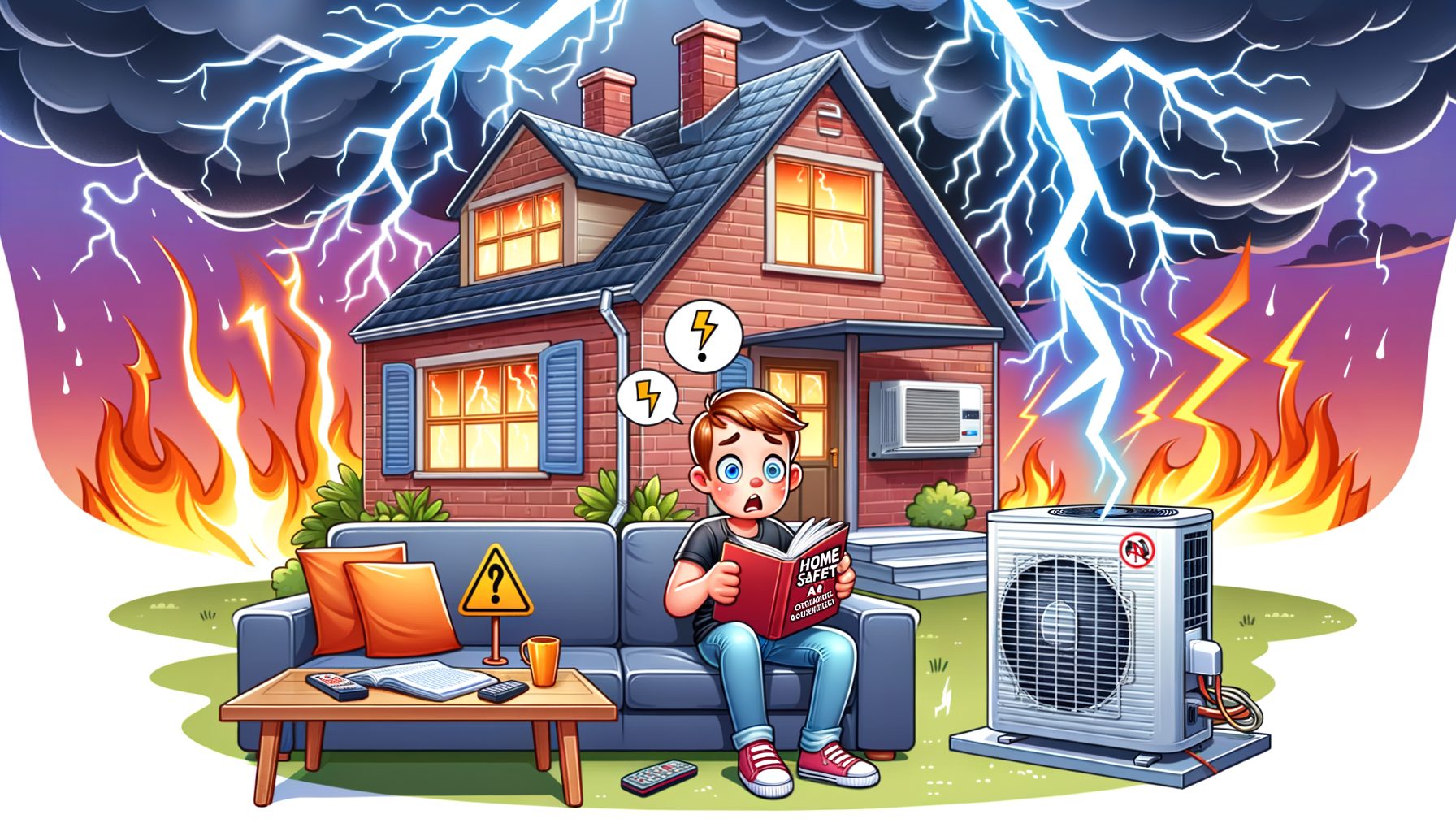
When the weather turns wild, the first question many people ask is simple and urgent: is it safe to run your air conditioner during storms? You want to stay cool and keep humidity under control, but you also want to protect your home, your equipment, and most importantly—your safety. The short answer is: it depends on the type of storm, the condition of your electrical system, and how prepared you are. The guide below breaks down real risks and practical steps so you can make confident decisions before, during, and after severe weather.
The Real Risks of Running an AC During Storms
Storms don’t all behave the same, and your air conditioner (AC) faces different hazards depending on whether you’re dealing with lightning, high winds, extreme rain, hail, or rolling blackouts. Lightning-induced power surges are the most damaging electrical threat. While a direct strike is rare, indirect surges can travel through power lines, phone lines, or even the ground, enter your home’s wiring, and fry sensitive components like compressor windings, control boards, and thermostat circuits. According to the U.S. National Weather Service, the U.S. sees roughly 25 million cloud-to-ground lightning flashes each year, and homeowners file thousands of surge-related claims annually. Even a brief surge can cause long-term reliability issues that don’t show up until weeks later.
Heavy rain, especially when driven by wind, can force water into outdoor condenser units or through building penetrations, leading to short circuits or corrosion. Flooding is an absolute red flag: if water rises above the base of the outdoor unit or submerges electrical connections, do not operate the system until it’s been professionally inspected. Hail and flying debris may crush coil fins or damage fan blades, reducing airflow and forcing the compressor to work harder, which can overheat the motor. During high-wind events like tropical storms or hurricanes, airborne debris is often a bigger threat than rain itself.
Grid instability brings its own problems. Brownouts (low voltage) and rapid on/off cycling during outages put intense stress on compressors. Starting an AC demands a high inrush current; repeat restarts in quick succession can overheat windings and shorten compressor life. Some modern systems include time-delay protections, but not all do. In regions with frequent outages during storms, power quality issues matter as much as the weather.
Bottom line: running your AC during storms isn’t automatically unsafe—but operating without surge protection, without a plan for power fluctuations, or when flooding is possible exposes you to avoidable risks. Those in lightning-prone or hurricane-prone areas should treat the AC as a critical appliance that deserves layered protection to save money and downtime over the long run.
| Storm Type | Main AC Risk | What Can Fail | Suggested Action |
|---|---|---|---|
| Lightning/Thunderstorm | Power surge via utility lines | Control board, compressor, thermostat | Use whole-home surge protection; consider shutting down during intense lightning |
| Hurricane/High Wind | Debris impact, rain intrusion | Fan blades, coil fins, wiring | Pre-cool home, power down, secure yard; cover unit only when off |
| Torrential Rain/Flooding | Water ingress, electrical short | Contactors, capacitors, motors | Do not operate if flooded; get professional inspection |
| Heat Wave with Brownouts | Low voltage, short cycling | Compressor windings, capacitors | Install voltage monitoring/time-delay; raise setpoint; pre-cool |
Practical Safety Steps Before, During, and After a Storm
Preparation is your best insurance. Before storm season, schedule a professional tune-up to ensure proper refrigerant charge, clean coils, and tight electrical connections. Ask your technician about adding a hard-start kit or soft-starter if your compressor struggles at startup; these lower stress during power fluctuations. If the outdoor unit sits in a low-lying spot, discuss elevating it above known flood levels and verify that the pad is level and stable. Clear vegetation and remove loose items (lawn furniture, toys, branches) that could become projectiles in high wind.
Install layered surge protection. A whole-home surge protective device (SPD) at the electrical panel shields every circuit from large surges, while a dedicated SPD or surge-rated disconnect for the condenser adds local defense. Taken together, the two layers dramatically reduce the chance a surge will reach the control board. Many homeowners also add a voltage monitor/time-delay relay that prevents the AC from restarting too soon after a power flicker—usually a 3–5 minute delay—protecting the compressor from short cycling.
When a severe storm is imminent, take advantage of pre-cooling: set your thermostat a few degrees lower than normal for a couple of hours so your home acts like a thermal battery. Then raise the setpoint slightly and close blinds/curtains to retain cool air. If you expect intense lightning or a high probability of outages, consider shutting off the AC at the thermostat and switching off the condenser’s disconnect or the dedicated breaker. Doing so reduces exposure to surges and prevents automatic restarts into unstable voltage.
Never cover a running unit. If you use a cover, only place it after the AC is powered down and the fan has stopped, and only when high winds or hail are likely—remove it as soon as practical. A tight plastic wrap traps moisture and can accelerate corrosion; a breathable, purpose-made cover is safer. During the storm, avoid adjusting the thermostat repeatedly—set it and leave it, minimizing starts. If you hear odd noises (grinding, repeated clicking) or smell electrical burning, power down and wait for conditions to stabilize.
After the storm, perform a visual inspection before turning the system back on. Look for standing water, bent fan guards, damaged fins, or dislodged panels. Confirm that debris hasn’t entered the top of the condenser and that drain lines are clear. If the unit was partially submerged or you suspect a surge (tripped breakers, nonresponsive thermostat), don’t operate it—call a licensed HVAC technician. For ducted systems, verify indoor air quality: change the filter, and if the home had any water intrusion, consider running the fan on low with a dehumidifier to dry building materials before returning to normal cooling.
Surge Protection and Power Quality: What Actually Works
Surge events come in two common flavors: external (lightning, utility switching) and internal (large appliances switching on and off). External surges can exceed tens of thousands of volts before protective devices clamp the spike down. Your AC’s control board and capacitor are sensitive to these spikes; even if they don’t fail immediately, repeated stress shortens life. A Type 1 or Type 2 whole-home surge protector installed at the main panel is the most effective first line of defense. Look for UL 1449 listings, high surge current ratings (e.g., 40–80 kA per phase), and indicator lights that confirm protection status. Many utilities now offer meter-based SPDs as well.
At the equipment level, a dedicated surge protector at the disconnect adds local clamping close to the load—think of it as catching what the panel SPD doesn’t. Because no SPD is perfect, pairing surge protection with good grounding and bonding is critical; with poor grounding, even the best SPD can be far less effective. Have an electrician verify that your grounding electrode system meets current codes and that neutral and ground are correctly separated in subpanels.
Brownouts and flickers pose a different challenge. Low voltage raises amperage draw and heat in motors. A voltage-monitoring relay can cut power to the condenser when voltage drops below a safe threshold (often around 190–200V for a 240V system) and delay restart until stability returns. A time-delay function—either in the thermostat or in a separate relay—prevents short cycling after a power blip. For systems prone to hard starts, a soft starter smooths inrush current, reducing lights-dimming moments and compressor stress.
What about plug-in power strips or a UPS? Standard power strips are usually inadequate for an AC condenser; they aren’t designed for high current loads or outdoor environments. A traditional UPS isn’t suitable for central AC—it can’t deliver the required amperage or starting surge. If you use a portable generator during outages, ensure it’s properly sized: central ACs may require 5–8 kW (or more at startup). Inverter generators provide cleaner power, but always use a transfer switch and never backfeed a panel. Incorrect generator use risks fire, equipment damage, and carbon monoxide poisoning.
Special Cases: Window Units, Portable ACs, Mini-Splits, and Heat Pumps
Window and portable ACs have different risk profiles. They plug into standard outlets, so they’re more exposed to indoor surges and usually lack advanced protections. A high-quality surge protector rated for the unit’s amperage can help, but be sure it’s properly grounded and UL-listed. Because these units are often near windows, watch for water ingress during wind-driven rain; seal gaps and avoid operating if water is dripping near electrical connections. Portable ACs use condensate tanks or drains—ensure hoses are secure before a storm to avoid spills when winds drive rain against the building.
Mini-splits (ductless heat pumps) combine outdoor condensers with indoor wall cassettes. The outdoor unit faces similar surge and debris risks as a central AC, so panel-level SPDs and a dedicated surge device at the disconnect are wise. Many mini-splits include built-in time delays, but confirm in your model’s manual. Because mini-splits often operate at lower power and have inverter-driven compressors, they can handle voltage variations a bit better—yet they’re also packed with sensitive electronics, making surge protection even more important.
Heat pumps deserve special attention in winter storms, freezing rain, and ice events. During freezing conditions, the outdoor coil may ice up and the unit enters defrost mode periodically. After an ice storm, clear snow and ice around the unit’s base and maintain 12–24 inches of clearance for airflow. Chipping ice off the coil should be avoided—it can puncture tubing. If the fan won’t spin or you hear scraping, power the unit down and schedule service. In heavy rain or flooding, the same no-operate rule applies if water has reached electrical components. For hurricane-prone regions, consider a manufacturer-approved hurricane tie-down kit and elevate the condenser above base flood elevation where code requires.
For any system type running on a generator, confirm the starting current requirement. Some inverter-driven mini-splits can start on as little as 1–2 kW, making them a practical cooling option during outages, but verify specs. Always prioritize safe exhaust routing for generators and avoid indoor operation under any circumstances. If in doubt, it’s safer to shut down cooling equipment during the peak of a storm and restart after conditions stabilize and you’ve inspected for damage.
Energy and Comfort Strategy: Staying Cool Safely Without Overloading the Grid
Storms often coincide with heat waves, and grid stress can raise the chance of outages. Smart comfort strategies reduce risk and keep you safer if the power blinks. Pre-cooling is your starting play: drop the thermostat 2–3°F below normal 1–3 hours before the storm hits while the grid is stable. Close window coverings to cut solar heat gain, and seal doors and windows. As the storm arrives, raise the setpoint slightly—every degree higher can reduce compressor runtime by 3–5% while comfort remains acceptable if you manage humidity.
Humidity control matters more than most people realize. At the same dry-bulb temperature, a lower indoor humidity can feel several degrees cooler. If you have a thermostat with dehumidification control or a standalone dehumidifier, use it to maintain 45–55% RH. The approach keeps comfort high even at a higher temperature setpoint. Run ceiling fans counterclockwise to enhance evaporative cooling; they lower perceived temperature by 2–4°F, but remember fans cool people, not rooms—turn them off when you leave.
During grid alerts or rolling blackouts, avoid frequent thermostat changes and large setbacks. Aim for steady operation to prevent hard restarts. If you have a demand-response program with your utility or a smart thermostat (e.g., ENERGY STAR certified), opt in—these systems can pre-cool and stage loads to smooth grid peaks. If an outage occurs, keep doors and windows closed to preserve cool air, and switch to spot cooling (battery fans, a small inverter-driven mini-split on a generator, or a single room with a portable unit) rather than powering the entire house.
Know when to pivot: high indoor temperatures and humidity can be dangerous, particularly for infants, older adults, and people with chronic conditions. If your home exceeds safe levels and you cannot cool it, head to a community cooling center or a friend’s home with power. Plan ahead by noting local resources and keeping a go-bag with essentials. Safety comes first—your AC can be repaired or replaced; your health cannot.
Quick Facts and Numbers
| Fact | Typical Value/Range | Why It Matters |
|---|---|---|
| Annual lightning flashes (U.S.) | ~25 million | Highlights surge risk during thunderstorms |
| Whole-home surge protector cost | $200–$700 (device) + installation | Core protection for all circuits, including AC |
| Central AC compressor replacement | $1,500–$3,000+ | Surge damage can lead to costly failures |
| Recommended restart delay after outage | 3–5 minutes | Prevents short cycling that overheats compressors |
| Comfort boost from ceiling fans | Feels 2–4°F cooler | Allows higher setpoint with similar comfort |
FAQs
Q: Should I turn off my AC during a thunderstorm?
A: If lightning is frequent or outages are likely, turning off the AC at the thermostat and the outdoor disconnect (or breaker) reduces surge risk and protects the compressor from unstable voltage. Pre-cool first if possible.
Q: Is it safe to use a window AC during heavy rain?
A: Generally yes, if the unit is properly installed and sealed. If water is entering around the unit or dripping onto electrical components, turn it off and fix the leak before resuming operation.
Q: Can a surge protector save my AC from a direct lightning strike?
A: No device guarantees protection from a direct strike, but layered surge protection (panel + equipment-level) and proper grounding greatly reduce damage from most surge events.
Q: How soon can I restart my AC after a power outage?
A: Wait at least 3–5 minutes to allow pressures to equalize and to avoid short cycling. Many thermostats and relays enforce this delay automatically.
Q: Is covering the outdoor unit during a storm a good idea?
A: Only if the unit is powered off and you use a breathable cover. Never cover a running unit, and remove any cover promptly after the storm to prevent trapped moisture.
Conclusion
You’ve now seen the real risks of running an air conditioner during storms—surges, flooding, debris, and unstable power—and how to manage them with layered surge protection, smart pre-cooling, careful shutdowns during peak danger, and thorough post-storm checks. Special considerations for window units, portable ACs, mini-splits, and heat pumps were also covered, along with energy strategies that keep you comfortable without overloading the grid. The bottom line: with preparation and a clear plan, you can protect your equipment and maintain safe, livable indoor conditions even when the weather is at its worst.
Take your next step today: schedule a pre-season HVAC checkup, ask an electrician about installing a whole-home surge protector and a voltage-monitoring relay, and set up storm routines for your household (pre-cool, secure the yard, identify the disconnect, and know when to shut down). If you rely on a generator, confirm that it’s correctly sized and connected via a transfer switch, and practice safe operation. Small actions now prevent big problems later.
Your home should be a sanctuary in any weather. With a few smart upgrades and habits, you’ll stay cooler, spend less on repairs, and face the next storm with confidence. What’s one protective step you can put on your calendar this week—surge protection, maintenance, or a family storm plan? Start there, keep going, and let safety lead the way.
Helpful Resources
– NOAA Lightning Safety: https://www.weather.gov/safety/lightning
– U.S. Department of Energy – Home Cooling and Storm Prep Tips: https://www.energy.gov/energysaver/heat-and-cool
– ENERGY STAR – Smart Thermostats: https://www.energystar.gov/products/smart_thermostats
– CDC – Extreme Heat Safety: https://www.cdc.gov/disasters/extremeheat
– NFPA – Surge Protection Basics: https://www.nfpa.org
– AHRI – HVACR Technical Guidance: https://www.ahrinet.org
Sources
– National Weather Service Lightning Statistics and Safety: https://www.weather.gov/safety/lightning
– U.S. Department of Energy, Energy Saver (Cooling, Heat Pumps, and Home Energy Systems): https://www.energy.gov/energysaver
– ENERGY STAR (Smart Thermostats and Home Performance Guidance): https://www.energystar.gov
– CDC Extreme Heat Preparedness: https://www.cdc.gov/disasters/extremeheat
– NFPA and UL Standards (UL 1449) on Surge Protective Devices: https://www.ul.com; https://www.nfpa.org